Showing posts tagged with: Process Show all posts
Posted Friday, 19 October 2012
The Cascading Process
Over a three month period, with the support of two residency programs, I have completed one new installation work.
Interestingly, the final form of this work did not fully take it's current shape until the final week.
In another post I'll talk about the work itself.
|
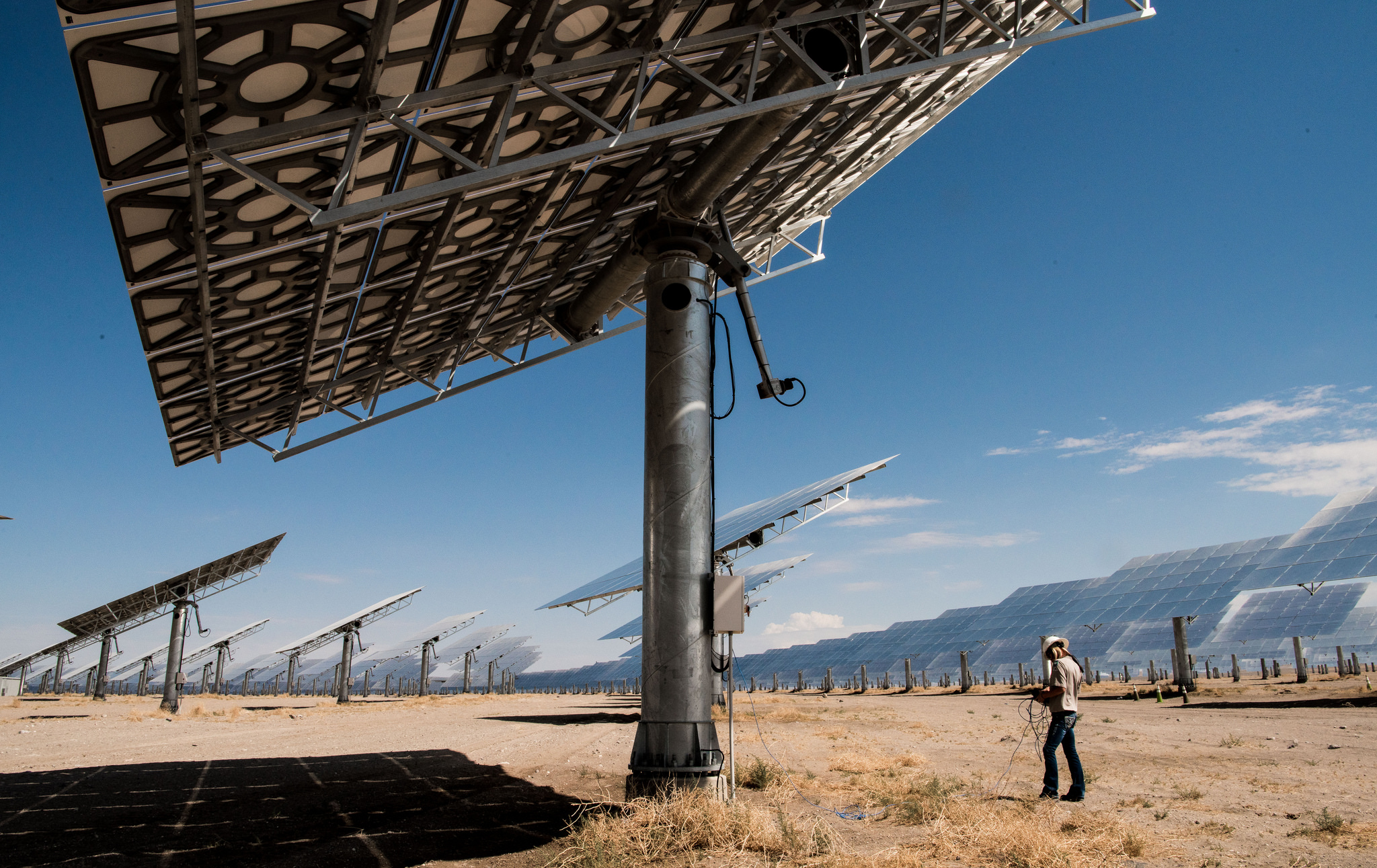
| Water cascading down a cliff face by tillou79 |
But for now I want to offer some thoughts about the process I use to make installation work, how and why that process has changed, and to talk about the value I place in criticism.
Leaving the outcome open
One of the recurring themes in my practice, particularly since conversations with Tobias Rosenberger last year, has been openness to change.
As both an artist and software engineer I should point out that there is a trend in software engineering which promotes openness to change (agile). But this is more about being responsive to changes you can't predict, and managing and encouraging that change with project stakeholders.
To the engineer in me, change is something to be managed effectively; to the artist, change and experimentation are vital, and at the forefront of my process. Given that my installations generally require custom software, I'm pleased to say the two approaches can be complimentary.
Course changes
I tend to characterise the open-ended process as a cascade, like in the image. (Not to be confused with the Waterfall software design model.)
In a cascade, when you begin at the top, you have no idea which point at the end of the journey you will end up. Several times on the journey you will hit forks, and will choose (or be forced to choose) new directions. As you travel, your idea may become more or less clear about where you are headed, but is still open to dramatic change.
When the outcome of a project was left open, you can look back across it and see lots of not-taken routes. These routes, although not present in the final work, played a very important role in leading to the final outcome. I won't say that they necessarily 'add layers' to the final work, but they do add layers to the journey which produced it, in whatever form it finally takes.
Criticism
How do you know when you've hit a fork, and which route to take?
It's hard to see something with fresh eyes when you are working on it every day, and you need fresh eyes to get a sense of the alignment between your intentions and what you have created.
This is where a trusted group of critics comes in. Other artists, friends, people at institutions and organisations you are related to - and genuine audiences, for example in open studios.
Crits at CAC
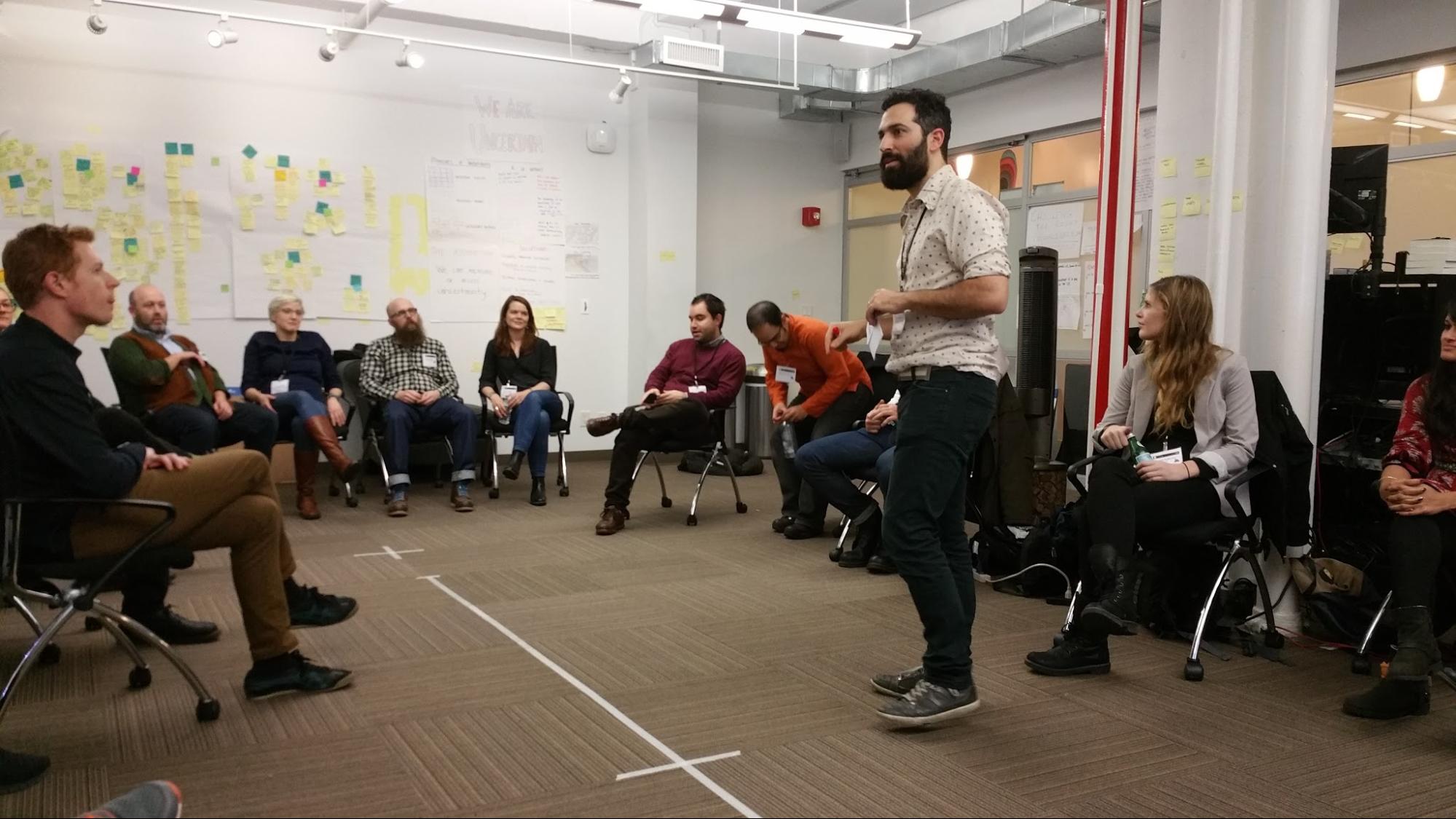
The crits at CAC take the form of group studio visits. They are weekly, all resident artists take part, and they are timed to about 10-15 minutes per artist.
Each artist is invited to present his or her work, and to opt for just 'eyes and ears' or for a bounds-free, open ended discussion. The former is useful if you are at a certain stage of your process and aren't ready for a full crit yet, but most weeks many artists opt for the latter.
| |
| Studios at CAC |
I found the most useful way to take advantage of this process was to set up a 'sketch' installation each week, representing the direction I was going at that moment (ready or not, mature or not). I would organise the space in a way similar to how I would present the work in a gallery, because installation is very experiential, and the space around the piece is just as important.
Not adding layers
I would then let the group walk into the space in front of me, and then wait and not say anything. In any group, even shy ones, there are opinions bubbling under the surface and it doesn't make sense to pre-shape or pre-censor those opinions by 'framing' your work verbally.
I've heard that crits can be impassioned affairs, although I've never experienced this personally. Most artists seem to recognise that it is important in crits for the group to be able to talk openly and critically about the work they see.
Points of change
The cascading effect, aided by criticism, provides you as an artist with a approach in which you can explore openly - intellectually, visually, experientially and so on.
You can 'feel out' literally any direction, knowing that critical feedback will aid you. It may augment the direction by adding previously unconsidered layers. It may deaden the direction by pointing out potential flaws. It may highlight potential forks in the road, or it may confirm a direction by demonstrating that your critical audience is thinking about the subjects, questions and ideas you intended.
Each of these are valuable and allow you to bounce from one direction to another, and to zero in on a landing spot as you get closer to it.
Criticism and Approval
One final note - it's important to bear in mind that asking for criticism is not the same as asking for approval. Asking for approval leaves you in a weak position, and it is far better to ask for criticism and be supplied with a compliment than vice-versa.
By contrast, when asking for criticism you need to be prepared to accept that criticism on it's own terms. You may not agree with the criticism, but that doesn't mean it isn't valid. I find it helpful to try to understand the critique within the contextual framework from which it came. This often means asking questions back and trying to flesh out the context.
But, finally it will always be down to you which feedback to respond to, if at all. And ultimately it's an approach that helps you learn to trust your intuition.
Posted Tuesday, 9 October 2012
Working with Total Space
Last night I cleared (almost) everything out of my studio - so that I could focus on the installation in terms of it's 'total space':
| |
| Rocks in Studio 1 at CAC |
By 'total space' I mean the space around the work, which viewers experience just as much as the work itself - in installations this space is part of the work and cannot be separated.
In this post I'll describe some of the dimensions I am considering when looking at this space, in the context of the work I'm currently developing.
The original 'installations'
Installation art got it's name because curators used to have to decide how to hang paintings and place sculptures. This was termed 'installation', and photographs for publication of several works together were called 'installation shots'.
|
| An installation shot, at the Smithsonian Photo by Smithsonian |
For installation artists much, if not all, of that process of arrangement of objects in space has become an essential aspect of the artwork itself. Each work cannot exist in isolation but has to be considered in terms of it's relationship to the space in which it is installed.
So in practice, the work must be 'site-specific', or somehow transposable to more than one location.
Using the architecture
An interesting antecedent for 'transposable' work is Sol Lewitt. A few weeks ago at Mass MOCA I saw the work 'Wall Drawing 51: All architectural points connected by straight lines'.
As the title suggests, this work can be recreated in any location (as long as it has some architectural points).
|
| Wall Drawing 51: All architectural points connected by straight lines Photo by br_5530 |
As with much of LeWitt's work, the art is in the crafting of sets of repeatable instructions. Those instructions can then be carried out again and again to produce physical instantiations of the work.
This is one way of making the work mutable, but it also carries a rigid inflexibility that constrains the piece and prevents it seeping beyond a defined boundary; the work cannot 'mutate' beyond the prescription of the instructions.
Much more common is the approach that the artist must be physically present to carry out or oversee the instantiation of the installation. The consideration then is how the work can mutate to converse with new surroundings in a way that compliments, augments or challenges it's origin.
Navigating the space
There are a number of transposable elements I am currently considering in how I present my work. Each will have to be reconsidered in each location it is installed, and it is worth noting a few of them here.
Firstly, what is the viewer's initial experience on entering the space?
Beyond that, what path(s) can viewers walk through to enter the space and approach the work? Which are more traveled, and why? What aspects of the work are accentuated by particular routes? Which routes encourage temporal or physical interaction with the piece, and which don't?
The routes viewers can take will have a big impact on how people respond to the installation. A 'throwaway comment' type of an installation might call for fast and casual footfall, but for my work which requires some time I am experimenting with ways of allowing passage through, while also creating a pool of space which is separate from the traffic, in which time can be spent and immersion can occur, without prescription that it must occur.
Divisions within the space
What distance do you want viewers to have from the work? Do you want people to walk through and explore, or is the work to be physically cut off, distant, or somehow different from the viewing space they occupy?
There is a work by Jospeh Beuys on permanent installation at Centre Pompidou in Paris, "Plight", which was very influential on me. One of the key aspects of the room, when we step back and stop thinking about the silence, the felt, and the presence of the room, is that you can't enter the space.
|
| Plight, Joseph Beuys Photo by Gastev |
A rail prevents your entry, and also delineates a small viewing platform. This gives the space a sense of otherness, and timelessness. In this context, the rail is part of what gives the installation it's gravity, it's immanence, it's sense of potential.
The frame
And for all the talk about the democratization of space, about how installation takes away the centred viewer, there is always still a frame within which your work will be considered.
This might be an institutional frame, and therefore conceptual. But even physically, there is a frame provided by the walls, by markings on the floor, by the use of light, by ropes, gates or rails. And if there isn't a frame already, you have the option of introducing one. As in "Plight" this frame can serve as a boundary, or the frame can be just a suggestion.
In many room-sized installations there is no physical frame - this means that the work is fully immersive and is a deliberate move on the artist's part to obscure the frame so that viewers are not aware it. In these cases the work can still be framed by the physical features of the room, and particularly by the transitional nature of the entranceway provided to enter the space.
In any case, the concept of a frame is something which you can work with or against.
Emphasis and de-emphasis
What elements of the space are the ones that viewers can't see?
In the work I am creating at the moment, I want to draw back the sense that technology is central in the work. So I am experimenting with techniques for placing the projector I am using to craft the light out of view. This is not to attempt to obscure the fact that a projector is the medium by whch the light is being crafted, but rather to de-emphasise the role the projector plays and emphasise instead the light on it's own terms.
Indoor not outdoor
Since arriving here at CAC I have been increasingly focused on the installation potential for this project rather than outdoor. It's odd, because the project began with such an outdoor focus.
| |
| Outdoor shot at I-Park |
There were a whole set of issues related to working outdoors; technology, projectors, and sound equipment, and it was forcing me down a road of 'one-off' performances or interventions. Those elements are not crucial for this particular work at it's current stage, and so they have been sidelined.
There is still strong outdoor potential for this work, more so than my previous projects. However at this stage, quickfire experimentation took priority, and indoor rocks became both a pragmatic reality and a potent ground for exploration.
| |
| Packing up gear to take on the land at I-Park |
The conceptual grounding which was so engaging at the start, could be brought indoors and more easily experimented with. The oldness and brutality embedded in the broken-open shape and texture of rocks. The internal, perceptive world that we conjure up and it's relationship to the alien and disembodied.
These are ideas that I want to exploit in the studio, and if and when the time is right, to explore in an outdoor arena. Outdoors brings it's own set of potentials and challenges, but which I think need to be prepared for in the studio, and should be respected for inherent caveats.
- Tags:
- CAC Residency
- Influence
- I-Park Residency
- Rocks
- Land Art
- Feature
- Total Space
- Long
- Sol Lewitt
- Installation
- Process
- Joseph Beuys
Posted Thursday, 20 September 2012
Residency Begins at CAC Troy
I've arrived at my residency at Contemporary Artist Center (CAC) in Troy, New York. In this post I'll show some images of this beautiful location, and talk about the direction I want to take with my work from here.
The residency program is now run inside the historic Woodside Church, having moved from it's previous home in North Adams, Massachusetts.
| |
| Woodside Church, Troy, NY |
The night I arrived I was treated with all the other residents to the regular Sunday meal. The next night I took part in the weekly crit.
It was refreshing as it's been a while since I've been in a crit and I was able to put together a 'sketch' installation and have my work critiqued too.
| |
| Inside, the new CAC studios |
I showed a quickly-assembled installation and some media from my time at I-Park, and the conversation got quite in-depth.
This provided some context and the views of a set of fresh eyes, and made me think some more about the installation potential the work has, aside from the portable / outdoor aspect.
After the crit, I put together the short video below from I-Park, and together the crit and video formed an interesting retrospective. This set a context for the work I'll be developing in the coming weeks.
| Video showing the results of the work at I-Park in 'installation sketch' form |
The initial work developed at I-Park is a good starting point - it shows that the concept works but leaves open the direction.
At the moment, there is something open-ended about where the installation sketch takes you once you approach it as a viewer on it's own terms. The journey feels tied to the machine, the coating on the object's surface feels artificial. But what I am looking for is a human connection, one that works with the perceptual process, rather than trying to negate it.
It has a minimalist feeling - which I actually appreciate because of the way it allows the underlying textures to make a statement. But I feel like with some more experimental work there are ways I can express more, playing on the inherent darkness and light, and by finding a more human pace, rhythm, and timbre.
| Stained-glass window at the front of the church |
The new studio is a good size and I have had to spend time light-proofing it and setting it up. This is an interesting space to be working and feel this is the best place for the piece to develop right now.
I will look at some of the outdoor locations later as the residency progresses and judge whether there is an outdoor component at a later date. But for now, the work is studio-bound.
| Stained-glass window (detail) |
- Tags:
- CAC Residency
- Feature
- Long
- Process
Posted Thursday, 20 September 2012
Installation Sketch at Open Studios
This video is of an installation 'sketch' representing the in-progress piece I worked on during the I-Park Residency program.
| Installation sketch at Open Studios |
The shots in this video represent what visitors to I-Park Open Studios September saw on the day. It is the same work discussed in my previous post 'Perception as a Creative Process'.
The installation is an attempt to create a space which is immediately unfamiliar - purely because of the controlled light and acoustics - but which with time gains a new type of familiarity. The flat blades of colour penetrate the darkness to slowly reveal the objects texture in new ways.
At the end of the residency program I was at this fairly initial stage. I will be further developing the work during my residency at Contemporary Artist Center, in Troy New York.
Posted Saturday, 15 September 2012
Roman Moshensky's Mirror World
One of the other residents at I-Park, Roman Moshensky, has created this short film. It's a personal reflection on his stay in Connecticut.
The film features several of the residents staying at that time, and the narration is my voice speaking Roman's words.
The film uses the split screen technique Roman has been experimenting with, but where those films focus on the dialog between humans and animals, this film reflects on the relationship between Moshensky, I-Park and the forest.
The other residents featured in the film are Jee Soo Shin and Michael Fairfax.
In the film, you get to see some of Michael's process - which is an awesome sight - as he turns a dead tree into a musical instrument.
Posted Tuesday, 4 September 2012
Perception as a Creative Process
The work I've been pursuing in the last couple of years has been influenced by the idea of perception as a creative process. What this means is that when we look, hear and otherwise sense the world around us, the combined sensation we experience is not a mirror-like reflection of reality, but an ongoing, constructed, internal model.
It's not a new idea, in fact it has been the essential paradigm since Kant's so-called 'Copernican Revolution'. But I believe these ideas are intellectually and culturally crucial in an age of overpopulation, multiculturalism and burgeoning globalisation; in which value system clashes are increasingly common.
I think that highlighting the powerful creative process of our individual perception can have an empowering effect, as it places us in the driving seat. First, I want to expand on this idea, and then I want to discuss how it is influencing my work.
| |
| Objects surfaces coated with light (detail) |
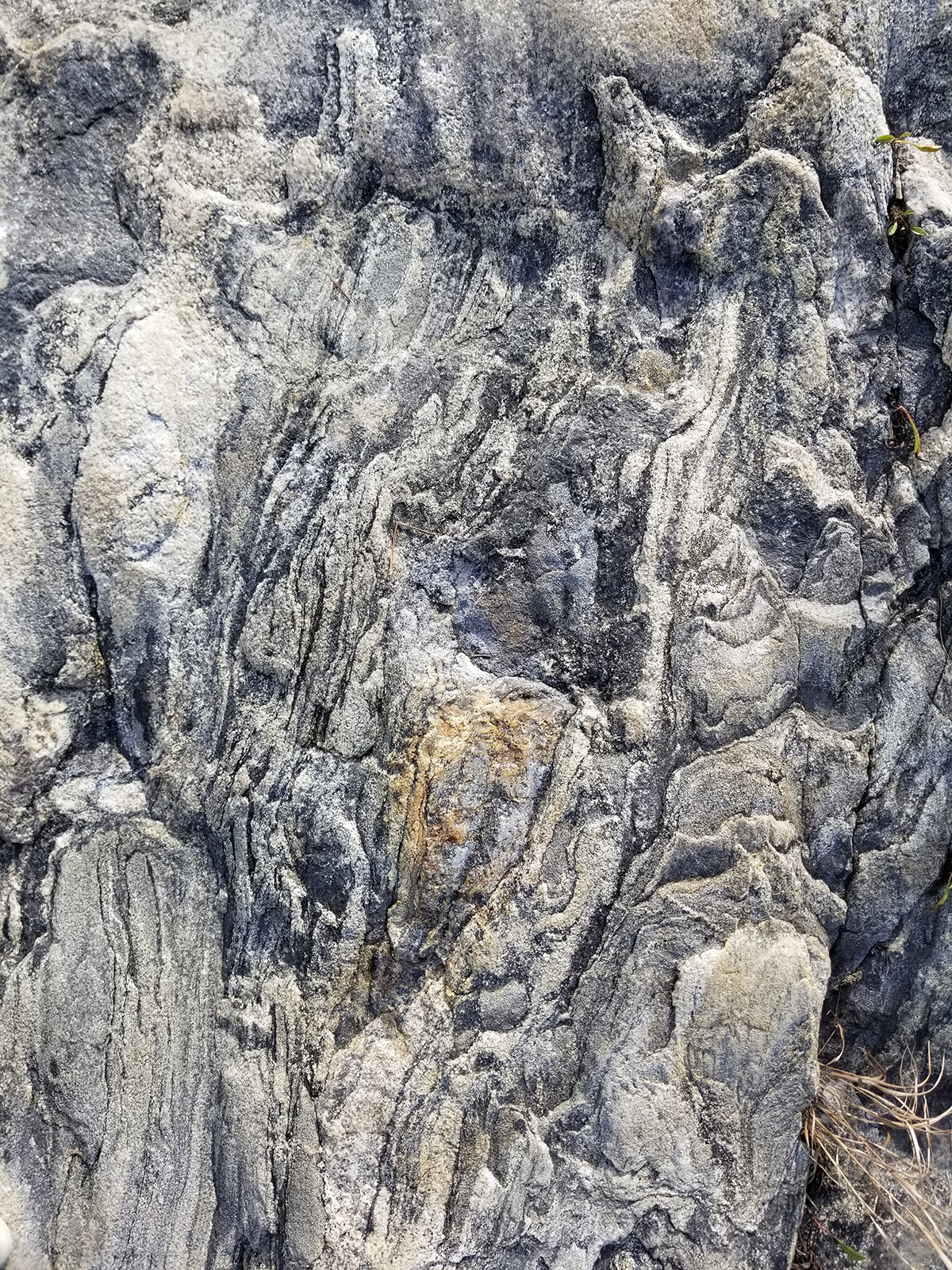
I've always been fascinated by the textures of rocks, stones, bricks and other repeated but unpredictable surfaces. There is so much differentiation across the surface of a rock, so many peaks and troughs, that it is impossible to focus on and remember the intricate detail of even one small section at a time.
On one end of the scale, we know from school that a grain of sand contains billions of billions (of billions) of atoms. And that each atom is enormous compared to the tiny particles it in turn is made of.
And at the other end of the scale, we know that the universe is so large that the extent of it we can even see is determined by the time it took the light to travel - billions of years - and that it goes on beyond that in all directions.
There is so much going on around us every moment, and we are permanently and fundamentally incapable of noting, perceiving, processing all this complexity. Instead we live our whole lives working only with generalisations: abstractions, metaphors, categories, narratives, histories, empirical models and so on.
And we are built to take much of these abstractions at face value, as though they inhere in the fabric of reality itself. It's a process which is fundamental to conscious life - it would be impossible to live (or to ever make a decision) without being able to do it.
| |
| Object surfaces coated with light |
Some of these abstractions - cultural differences, language and so on, are learned. Going deeper, many of the more fundamental abstractions are built into our perceptual apparatus, because they are essential to both our perceptual process, and are essential aspects of the things being perceived.
We've all seen the optical illusions that demonstrate perceptual flaws. But optical illusions don't just demonstrate holes in an otherwise flawless perceptual process - they demonstrate the constructive way in which our entire experience is presented to us as reality.
For example, our eyes contain lenses, like those in a camera, which focus light onto a retina. A retina is a patch of light-sensitive tissue much like film. Like cameras, eyes are only capable of producing 2D images. The 3D world we experience is an internal mental construction, created by triangulating the positions of objects based on images from both eyes.
There may be a 3D world out there in front of us, but the 3D world we experience in our minds is a construction. It's a construction which enables us to navigate the 3D world it represents, but it's a construction nonetheless.
| |
| Grid to mask around object surfaces to be 'painted' with light |
A couple more examples. Colour is just the brain's way of representing different wavelengths of light (i.e. wavelengths of electromagnetic radiation from the sun). Each surface in front of us reflects a particular wavelength based on it's pigmentation, and our visual system assigns that wavelength an appropriate colour to help us navigate and respond appropriately to the things around us.
Our ears only sense changes in air pressure, but if someone is bouncing a ball behind you, you have an innate sense of the position. Your brain is combining data across the senses: performing complex sound frequency analysis and comparisons from both ear drums, borrowing from your memory of the scene the last time you looked in that direction, and continually updating the constructed model of reality you perceive.
And it only gets more complicated from there - add to this the intricacies of spoken language, facial cues, body language, taste, smell, hunger, fear, emotion, instinctive or learned over a lifetime, and automatically embedded into our perceptual process. We have the ability to override parts of this model, to reason our way past it and so on. But the model is a construction, and a large web of associations - some native to our DNA, the rest built from previous experience - determine how we currently experience it.
| |
| Objects gathered in the studio |
How much of what we perceive in an object inheres in the object itself? And what happens when we are presented with genuinely new experiences?
Various art movements have attempted to heighten people's bodily awareness, of their creative perception in action, inspired by Merleau-Ponty, minimalism and embodied viewing.
But what I'm interested in doing is not so much to increase the awareness of embodied space, but instead to reduce the foothold of the nexus of previous associations. To force new associations to be quickly constructed to account for the new phenomena.
Each time we travel to a new place, meet somebody new or different, this process of disorientation and new construction can occur. But when it happens in life, it's often muddied by the hustle and bustle of daily social reality, and of preconceived associations. I'm interested in creating spaces where this process can happen in relative isolation, so that the phenomenon on display can be appreciated on it's own terms.
To do this, I am experimenting with a technique of projected audio and video, with the two synthetically intertwined. I believe this approach can work to achieve these ends for a number of reasons.
Firstly, projection means low-light. As a viewer, the enveloping void of space around created in a night sky reduces the efficacy of the 3D-triangulation apparatus in your brain, offering you less certainty in the internal world you create. It offers less connection to specific other objects, and creates a space where the brightly-lit video is the focal point.
| |
| Objects in the I-Park graveyard |
Secondly, advances in computer technology in the last several years have made it possible to intertwine sound and light patterns in a way that is genuinely new. This provides a space for exploration where new multi-sensory spatial patterns can be created, reducing the baggage of learned preconception. The key mistake to avoid here is over-stimulation - it is best to avoid a sense of a 'light show', as that has a specific set of built-in associations.
Thirdly, the projection-mapping technique allows textures, light patterns, colours and so on to be 'warped' around objects, so that the objects are 'reskinned'. Again, the pitfall to avoid here is making the resulting light patterns too 'neat' or configured in a way which confirms or reminds of existing associations.
The space is 'alien', but it is not empty.
The space can be fully alive, but it takes the isolation and presentation as 'alien' to make such alien spaces live. The idea is to reduce the foothold of existing associations, but also to present a new space for exploration. In a space like this we can make a leap from that alien space, and try to find a connection in it - to find value from valuelessness.
- Tags:
- Value
- Merleau-Ponty
- Phenomenology
- Kant
- I-Park Residency
- Feature
- Long
- Process
- Personal Development
- Perception
Posted Wednesday, 29 August 2012
The I-Park Graveyard
This is the I-Park graveyard...
The graveyard of previous artist's installation work which has died on the grounds:
| |
| Objects at the I-Park graveyard |
I-Park has been around for over ten years, and with 6-7 artists in each season, they accumulate a lot of art on the grounds. Some of it doesn't survive, is temporary in nature, or was related to a performance piece. When this work is dismantled, this is where it ends up.
| |
| Words, wheels, and a tank |
There are mixed arrangements of objects, mostly rusted or dirty, many are new homes for insects.
| |
| Tins and tubing |
Artists from previous residencies have taken the time to organise and lay out this area into a kind of window-shopping experience. This area is tucked away behind the Red Barn, hidden from some of the more picturesque locations. But this junkyard of objects is more my natural home.
| |
| Tucked behind the Red Barn |
Ralph Crispino took us to the graveyard as the last stop on our introductory tour. I'm sure you'll see some of these objects again.
Posted Thursday, 19 January 2012
Light Waves
I've been invited to produce an artwork for Light Waves, an interactive lighting installation spanning several buildings in Ipswich. My work will feature as one of a series of works using the lighting infrastructure installed by Creatmosphere at the end of last year.
| A view of the theatre and derelict buildings from across the waterfront (Photograph by James Newton) |
We had a kick-off meeting last night to discuss the project, at the Electric Matchbox in Hackney Wick. Hayden and Denise talked us through the infrastructure.
The installation is based out of the Jerwood DanceHouse (we call it 'the theatre'), an international dance centre for training and performance. It's the brightly-lit building on the bottom-right in the picture above. Those lights are part of a DMX-controlled 109-part lighting installation which can be seen clearly from across the waterfront - from where the photo was taken.
| Close-ups of the old grain mill (Photographs by James Newton) |
Most of the 109 lights are housed on the façade of the theatre building, hence it's brightness. But a large number of lights are also installed in the adjacent buildings. The three tall buildings rising out directly above and behind the theatre aren't involved; the two wider buildings to the left of the theatre are part of the installation and filled with lights.
Those two buildings have been derelict for years. Seemingly the larger of the two housed an industrial grain mill, but now it's a home mainly to pigeons. Here is a report of it being on fire a couple of years ago, and here are some very nice photos of the interior.
| The projection and sounds follow human movement (Photograph by James Newton) |
The photo above shows a close-up of the entranceway to the theatre, which is accessed via the waterfront entrance and receives most of the footfall. This is the other dimension to Light Waves - a ground-level projection area which responds to human movement, along with a 2-channel elevated loudspeaker arrangement above.
The lighting for the buildings and the lighting in the projection are all controlled from central software - lovingly crafted by Hayden and available on the V4W website (click Digital Platform Preview).
| Light strips decorate the horizontal colonnade (Photograph by James Newton) |
The infrastructure is planned to remain installed for two years, and during that time a selection of artists will be invited to come up with concepts (and software) for how to use it. Each artist will have their work installed for one month.
The lights can be individually controlled, and the response time should be very fast (once Hayden installs some software to get around the bloated out-of-the-box DMX controller software). The building lights can respond to the movements of people under the projection, or the lights under the projection can respond to the light of the building. Similarly for the use of audio - sound can be used to control lighting or lighting can be used to control sound.
| The view from a steeper angle (Photograph by James Newton) |
This gives each artist considerable freedom - all they have to do to utilise the infrastructure is design some software to slot into Hayden's infrastructure patch.
Above is the view of the back of the disused mill. The position of the windows seems arbitrary, but it serves the building's original function. Inside each window there is not a room, rather a some kind of terrace. I'm sure I could describe that better if I had actually been to the space! But those odd arrangements on each side make this quite a peculiar show. It will be interesting to see what everyone comes up with.
Posted Wednesday, 14 December 2011
The Final Exhibition
A few nights ago, after 3 intense days and nights of working, we installed our collaborative installation at Freemote Utrecht. After all the work, it was up for about 6 hours.
The group I've been working with, V4W, do this a lot - it's all part of the process for them. Turn up with a bunch of equipment, create an artwork onsite during opening hours, and display it on the final night. While we were working, people came over and observed, made comments (and jokes), and asked questions.
| We were our exhibit (on the left) |
Speaking to Gareth and Hayden about it, they say they like the exposure it gives to the subculture of digital artists, musicians and programmers, i.e. us. It's difficult for people to get a handle on what exactly it is we do, unlike say in film, music or painting. Don't get me wrong, there is a world of hidden esoteric knowledge and in-culture in those media, but the difference is that audiences have had a lot longer to figure out their relationship to it.
| Discussing options |
We did a similar thing at AlphaVille, so this is my second run with V4W. For me personally, I like the challenge. But I'm not sure how convinced I am about working that way regularly - it's hectic. Quick choices have to be made, and with eight people on a short timescale, people can pull in different directions.
In any case, what results is quite nice simply for that reason. It's a Frankenstein of different creative impulses thrown together, each relatively uncensored and forced to mix on equal terms. No hierarchy seemed to develop, and no-one was precious or held the group to ransom. It's probably because they pretty much all know each other and have worked together before, and are an open-minded group.
| Doing Yoga... no not really |
Actually somebody in the group said that it's because we're all British (and so we have a stereotype to live up to). I'm not sure about that, but with a different mix of people, I could easily see more tension.
So in effect Gareth was more a coordinator than a director. As for my role, I became more a technical consultant and facilitator. Due to some tight deadlines for proposals in the run-up to the trip, I wasn't really able to get into the design discussion until after the concept was concretised. I arrived looking for something to do and found an open niche as Max/MSP developer, helping to create the interactive sound based somewhere between Barney's sound design (mostly musical) and Alex's audio manipulation ideas (mostly noise).
| Some of the other installations |
I didn't feel like what we needed was another voice on top of these two, pushing yet another creative direction, so instead I looked for synthesis between them. The two streams proved divergent, and I think in the end we just allowed that to be. There was a music section and an interactive sound section, running at different times, and honestly each were far better without the interference of the other.
The three aspects of the video - the particles, the floor and the balls - all seemed to come together on equal terms, but we'll see how people feel about that in the retrospective we have coming up.
So again, it all points to what it was - a 3 day, open, creative experiment. We created a piece for exhibition, but in the end the exhibition was us, programming, composing, designing and setting up hardware. At least, I think that's what 70% of visitors to the festival will remember from it. But it seems that's what V4W are about - exposing the subculture.
I'm looking forward to (and slightly afraid of) the next time we work together.
- Tags:
- Freemote Threshold
- 3D
- Kinect
- Feature
- V4W
- Freemote
- C#
- Max/MSP
- Installation
- VVVV
- Process
- Audio / Visual
Posted Friday, 2 December 2011
Freemote Utrecht
I've been invited to collaborate with V4W next week in Holland, at Freemote Electronic Arts festival in Utrecht. We'll be working on a multi-Kinect 3D augmented reality piece - a flyer has been posted here, should give you some idea.
Once I get there I'll be blogging about the creation of the work and the festival overall, should be a great week! Here are some photos from previous year's events, and the space we'll be working with.
Posted Thursday, 13 October 2011
Talk at Goldsmiths Digital Studios
I'll be giving a short talk at the Thursday Club tonight at 6pm. All welcome.
I'll be introducing my work at the arts / technology space Jaaga in Bangalore, and talking about my personal development over that period.
The Thursday Club is an informal meeting space for artists, technologists and academics to discuss current practice. It is hosted at Goldsmiths but is free for anyone to attend and take part in discussions.
Also speaking will be Pk Mital, an artist and researcher based at Goldsmiths.
- Tags:
- Goldsmiths Digital Studios
- Goldsmiths
- Feature
- Thursday Club
- Presentation
- Process
- Personal Development
Posted Wednesday, 31 August 2011
Simple Harmonic Motion
Simple Harmonic Motion is an audio-visual project by Memo Akten. He has shared a little about his process and some sketches on CAN, so we can see that the underlying pattern to this work is based around sine waveforms.
It's wonderfully simple - as points along the wave come into contact with a central line segment they trigger sounds and small visual effects. By slowing and speeding the frequency of the wave(s) and by graduated changes other simple variables, we slowly see natural patterns emerge through the audio / visual indicators.
Make sure to check out the post at CAN for more info on the process and the installation.
- Jaaga Residency (17)
- Jaaga (15)
- I-Park Residency (12)
- Process (12)
- V4W (10)
- Personal Development (10)
- Installation (10)
- VVVV (9)
- Field Research (8)
- Freemote Threshold (7)
- SuperCollider (7)
- Long (7)
- Freemote (7)
- Reflections (6)
- Audio / Visual (6)
- CAC Residency (6)
- Arduino (5)
- Tutorial (5)
- Influence (5)
- Max/MSP (5)
- Jaaga Sound and Lights (4)
- openFrameworks (4)
- Motor (4)
- Kinect (4)
- Projection Mapping (4)
- Portable Projection (4)
- Gravity (4)
- michael fairfax (3)
- Roman Moshensky (3)
- Rocks (3)
- Jee Soo Shin (3)
- Land Art (3)
- Picture This (2)
- Phenomenology (2)
- Git (2)
- Measure (2)
- Projection Bombing (2)
- Presentation (2)
- Creative Context (2)
- Natural Textures (2)
- Tess Martin (2)
- Scott Wilson (2)
- Alpha-Ville (2)
- Review (2)
- Untitled (Picture This) (2)
- Ralph Crispino (2)
- Cosm (2)
- Mac (2)
- Boaz Aharonovitch (2)
- C# (2)
- Mobile Projection (2)
- Memo Akten (2)
- Judith Stein (2)
- Generative Art (2)
- 3D (2)
All posts
May 2013
October 2012
September 2012
- Residency Begins at CAC Troy
- Installation Sketch at Open Studios
- Roman Moshensky's Mirror World
- Open Studios at I-Park
- Perception as a Creative Process
August 2012
- The I-Park Graveyard
- Scoping Out the Land
- Residency Begins at I-Park
- Residency at Contemporary Artists Center
July 2012
June 2012
- Stephen Lumenta's SC TextMate Bundle
- Adding OF Addons (ofxSuperCollider)
- Setting up SuperCollider with TextMate
- Switching to MacBook Pro
- QuickRef for SuperCollider
May 2012
- Getting Started with SuperCollider
- Getting Started with OpenFrameworks
- Overtones, Harmonics and Additive Synthesis
- Visit to Cold Spring
April 2012
January 2012
December 2011
- The Final Exhibition
- Playing with Particles
- Responsive Granular Sound
- Kinecting to the Network
- First Working Day
- Designs for Freemote
- Freemote Utrecht
- Untitled - Picture This (2011)
October 2011
- The Wider Context?
- Trading Time for Space
- Talk at Goldsmiths Digital Studios
- Intro to Marius Watz
- Practical Guide to Generative Art
September 2011
August 2011
June 2011
May 2011
April 2011
- Cosm, Collision Detection and Volume
- Vector-Base Amplitude Panning
- Intuition, and Direction of the Project
- Reflections: What is Jaaga?
- Going Further with Ambisonics
- Introduction to Ambisonics
- Surface (2010)
March 2011
- Servo Motors and Transistors
- Spinning a 12V DC Motor
- Spinning a 5V DC Motor
- First Week at Jaaga
- Presentation Style
- Beginning the Jaaga Fellowship
January 2011
November 2010
October 2010
September 2010