Showing posts tagged with: Bill Gould Show all posts
Posted Wednesday, 2 May 2012
Visit to Cold Spring
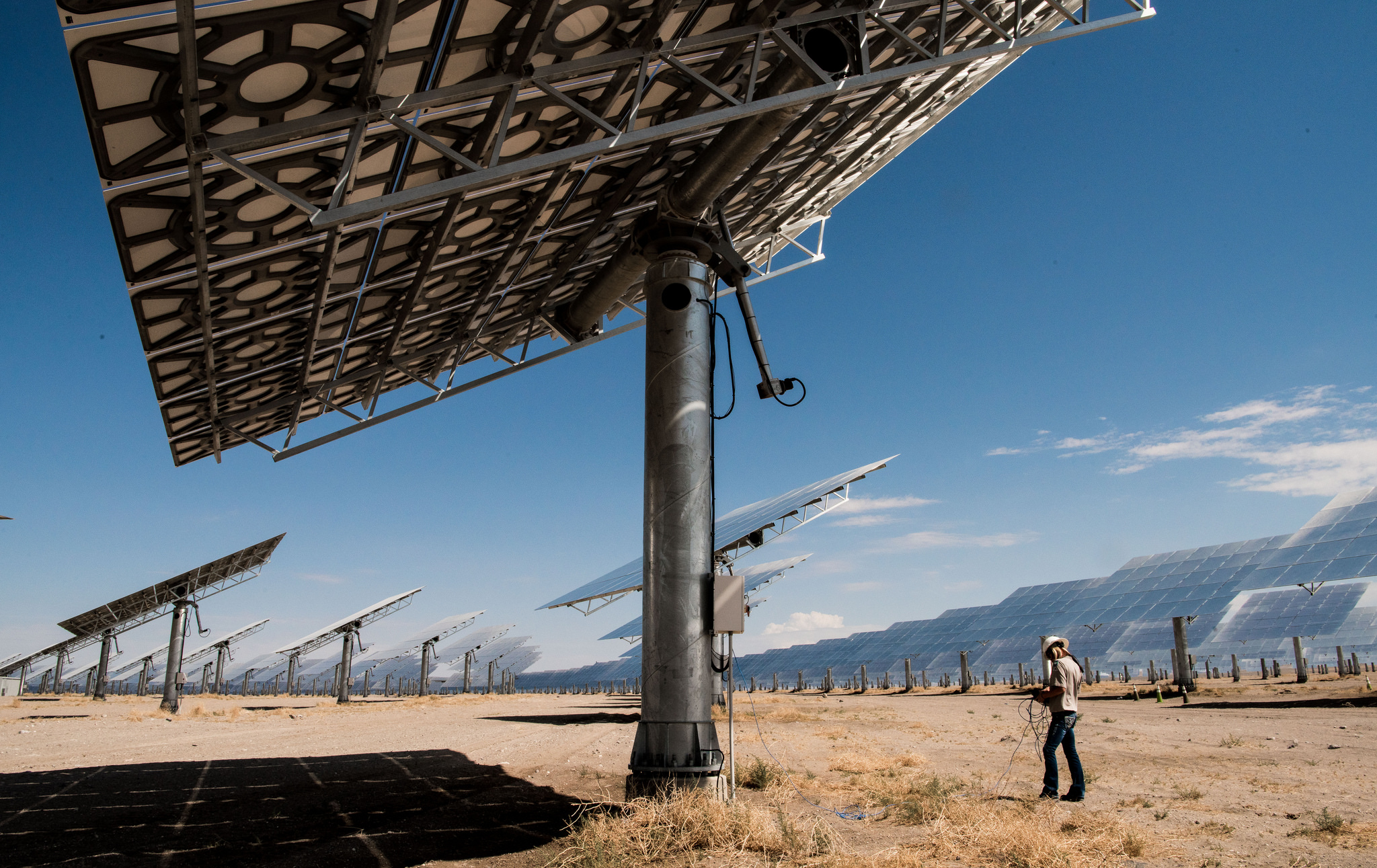
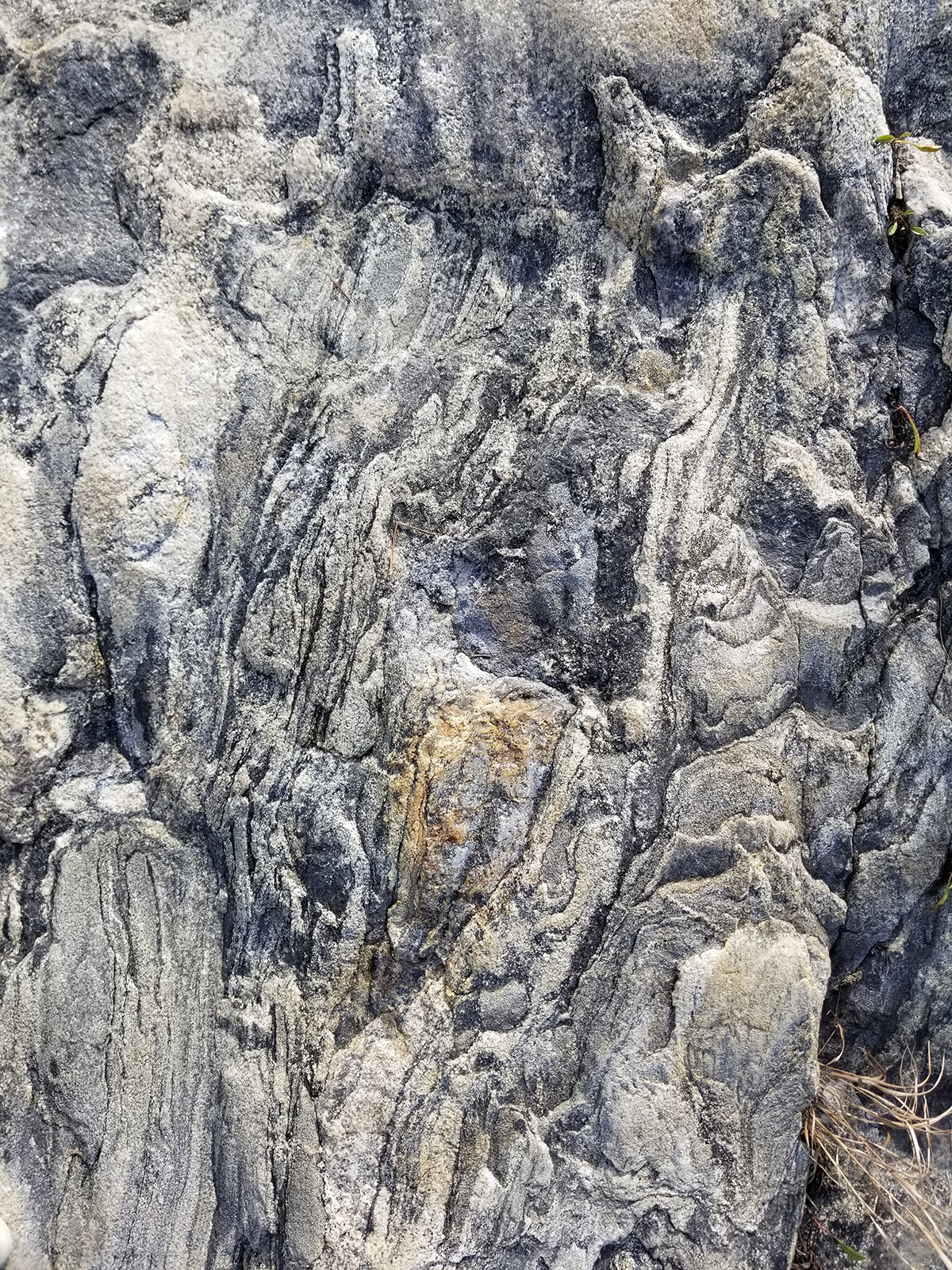
New York state has some outstanding areas of natural beauty. On Sunday we hiked up a trail in Cold Spring, and brought back some photographic evidence.
I want to talk in this post about some of the discussions that came up as we walked, and the way they are affecting how I'm thinking about my upcoming projects. I'll illustrate the text with some shots of our hike.
I met Hannah Gould, and as we hiked she told me about her father's studio out in San Jose, California - and their mutual admiration of Andy Goldsworthy. Bill Gould creates various types of physical sculpture, signage, fencing and gates for public locations.
It seems possible that I could arrange a trip to see him and spend some time in the studio creating work inspired by land art.
It all seemed to tie in very nicely with the plans I have been making for I-Park. It feels like a cloud is forming around this idea of 'land art', portable projection, and visual-sound correlation.
I'm beginning to see several disparate concepts converge. All of which I can come back to, flesh out and consider over the coming months.
Spatial augmentation and exploration
I'm really interested in thinking about the way that we consciously and unconsciously project value onto objects and environments around us. 'Nature' and 'natural objects', rocks, trees and rivers, are perceived with a given context based on the historic demographic context of the observer. In the work I produce I want to think about the ways my augmentations of these objects affect this sense of value.
Land art
For example, in the arrangement of natural objects in the traditional sense of land art, do we 'humanize' the object, in making it more relevant to us? Or are we moving closer to nature, in the sense that we are augmenting natural objects by revealing natural patterns?
And one step further from that, does it really make sense to demarcate 'natural' and 'human' and to posit them on either end of a scale?
Working with natural textures
And what happens to this conversation when we introduce digital elements?
If I project algorithmically-constructed patterns as light onto a naturally textured surface, does this do anything more to the surface than can be achieved with the use of natural materials alone?
Will the strictness of the algorithmic geometry work against the endless unpredictability of the natural texture? Will this form a disconnect, and what might this disconnect say about the demarcation between 'natural' and 'human'?
And does this disconnect occur in 'pure' land art?
I've always preferred 'natural' texture to algorithmically-generated ones (i.e. Perlin noise), and so I'm fascinated by the idea of projecting onto them. So much projection mapping is designed to attack as geometrically 'perfect' surfaces as possible, it will be really liberating to explore with the purpose of highlighting the 'flaws' in the surface rather than concealing them.
The synaesthetic effect
The aspect which excites me most about digital projection right now is the way it can be linked in real-time to other perceptible events - in particular simultaneously generated sound. Some people call this the 'synaesthetic' effect, though synaesthesia is about much more than just vision and sound.
Walking with Gene we discussed potential experiments we could work on with SuperCollider, and combining it with VVVV. Gene is passionate about SuperCollider at the moment, and we have already agreed to collaborate over the next few months before he goes to India.
These experiments, along with the land art training in Bill Gould's studio could provide a really solid base for the work I produce at the I-Park residency.
The technical part of portable projection
The one and only reason I am interested in 'portable projection', is so that I can walk off with a projector to a remote location and not have to worry about a power source. The way I've seen this achieved is by connecting a car battery to a projector. There are ofcourse pico projectors, but these have nowhere enough lumens to make a convincing 'coat of light'.
The car battery approach means that each projection will have a very ephemeral nature. The projector will need to be switched off shortly before the power runs out. This gives only about an hour, including set-up and mapping time.
Computer Vision and quick mapping
Gene is also very interested in projection mapping, and he is particularly interested in using Computer Vision libraries to create a real-time automapper using a webcam. This could mean that software could continuously scan a webcam feed, and use edge detection and other algorithms to continuously redraw it's internal representation of projected surfaces. This in turn would mean that as you move the projector around the object, the 'coat of light' applied would continuously update (a considerably lower-tech version of this).
This is lofty stuff, but I am interested in exploring this because it could speed up the mapping process. Which, when you are time-limited by battery life, would be a really positive thing.
I will come back and look at these subjects more in the coming weeks, to see where a little fleshing out takes them.
- Tags:
- Quick Mapping
- Natural Textures
- I-Park Residency
- Feature
- Andy Goldsworthy
- Bill Gould
- Portable Projection
- Synesthesia
- Lizardskin Studios
- SuperCollider
- Computer Vision
- Land Art
- Long
- Projection Mapping
- Jaaga Residency (17)
- Jaaga (15)
- I-Park Residency (12)
- Process (12)
- Personal Development (10)
- V4W (10)
- Installation (10)
- VVVV (9)
- Field Research (8)
- Freemote (7)
- Long (7)
- Freemote Threshold (7)
- SuperCollider (7)
- Reflections (6)
- CAC Residency (6)
- Audio / Visual (6)
- Influence (5)
- Max/MSP (5)
- Arduino (5)
- Tutorial (5)
- openFrameworks (4)
- Kinect (4)
- Portable Projection (4)
- Jaaga Sound and Lights (4)
- Motor (4)
- Projection Mapping (4)
- Gravity (4)
- Roman Moshensky (3)
- michael fairfax (3)
- Land Art (3)
- Rocks (3)
- Jee Soo Shin (3)
- Phenomenology (2)
- Mobile Projection (2)
- Boaz Aharonovitch (2)
- 3D (2)
- Natural Textures (2)
- Creative Context (2)
- Ralph Crispino (2)
- Untitled (Picture This) (2)
- Scott Wilson (2)
- Alpha-Ville (2)
- Projection Bombing (2)
- Presentation (2)
- Picture This (2)
- Generative Art (2)
- Review (2)
- C# (2)
- Judith Stein (2)
- Tess Martin (2)
- Cosm (2)
- Mac (2)
- Measure (2)
- Memo Akten (2)
- Git (2)
All posts
June 2013
May 2013
October 2012
September 2012
- Residency Begins at CAC Troy
- Installation Sketch at Open Studios
- Roman Moshensky's Mirror World
- Open Studios at I-Park
- Perception as a Creative Process
August 2012
- The I-Park Graveyard
- Scoping Out the Land
- Residency Begins at I-Park
- Residency at Contemporary Artists Center
July 2012
June 2012
- Stephen Lumenta's SC TextMate Bundle
- Adding OF Addons (ofxSuperCollider)
- Setting up SuperCollider with TextMate
- Switching to MacBook Pro
- QuickRef for SuperCollider
May 2012
- Getting Started with SuperCollider
- Getting Started with OpenFrameworks
- Overtones, Harmonics and Additive Synthesis
- Visit to Cold Spring
April 2012
January 2012
December 2011
- The Final Exhibition
- Playing with Particles
- Responsive Granular Sound
- Kinecting to the Network
- First Working Day
- Designs for Freemote
- Freemote Utrecht
- Untitled - Picture This (2011)
October 2011
- The Wider Context?
- Trading Time for Space
- Talk at Goldsmiths Digital Studios
- Intro to Marius Watz
- Practical Guide to Generative Art
September 2011
August 2011
June 2011
May 2011
April 2011
- Cosm, Collision Detection and Volume
- Vector-Base Amplitude Panning
- Intuition, and Direction of the Project
- Reflections: What is Jaaga?
- Going Further with Ambisonics
- Introduction to Ambisonics
- Surface (2010)
March 2011
- Servo Motors and Transistors
- Spinning a 12V DC Motor
- Spinning a 5V DC Motor
- First Week at Jaaga
- Presentation Style
- Beginning the Jaaga Fellowship
January 2011
November 2010
October 2010
September 2010